When Apple began transitioning its device lineup away from the Lightning connector, one small but meaningful accessory update came along with it: EarPods with a USB-C plug instead of the familiar Lightning tip. For anyone who grew up on the classic white Apple earbuds—or who simply prefers a wired connection over Bluetooth—this update matters more than it might initially seem. It’s not a flashy redesign, but it solves a very real compatibility gap that emerged as iPhones, iPads, and Macs moved toward a unified charging and data standard.
This article walks through what these USB-C EarPods actually offer, how people tend to use them, who might find them genuinely useful, and what’s worth thinking about before adding a pair to your bag or desk drawer.
A Quick Overview
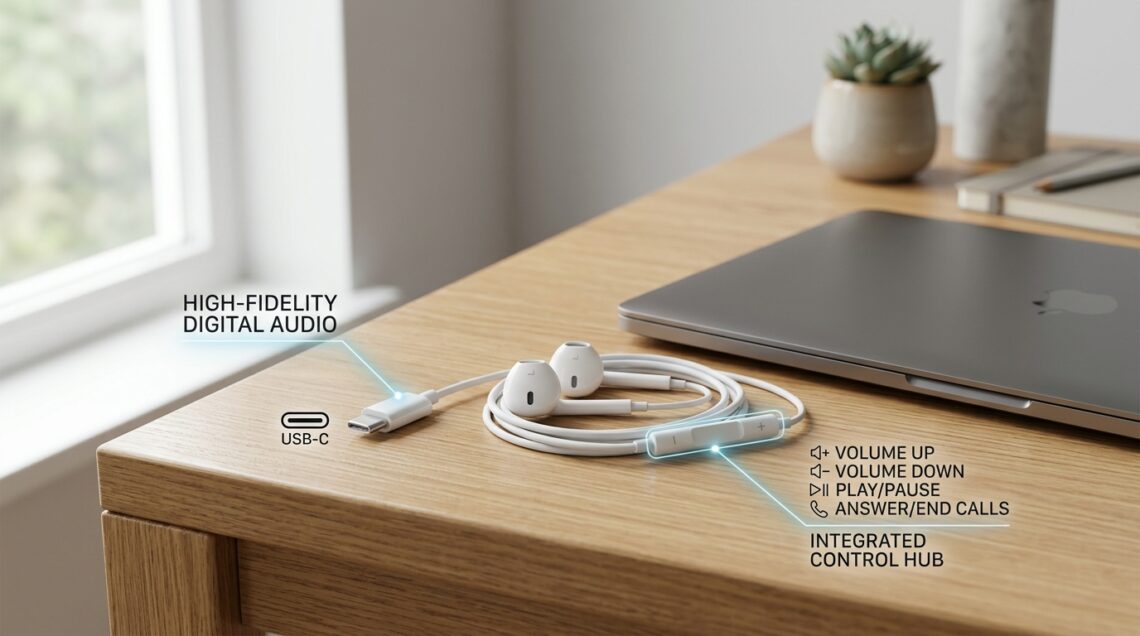
Apple’s EarPods with USB-C Plug are wired earbuds designed to connect directly to devices with a USB-C port. They retain the same general shape and acoustic design that Apple has used for years, but the connector has been updated to match newer hardware. Built into the cord is a remote that lets you manage playback, take calls, and adjust volume without touching your device screen.
Unlike Apple’s Bluetooth earbuds, these are entirely wired, which means no charging, no pairing process, and no battery to worry about. For some people, that simplicity is the whole appeal.
Key Features
USB-C Connector for Broader Compatibility
The most obvious feature is right there in the name. With USB-C now standard across many modern smartphones, tablets, and laptops, these EarPods are built to plug directly into that port. This matters especially for newer iPhone models, iPads with USB-C, and various Android devices that share the same connector standard, making them a more universally usable accessory than their Lightning-based predecessor.
Built-In Remote and Microphone
A three-button remote sits along the cord, allowing users to play or pause audio, skip tracks, answer or end phone calls, and adjust volume up or down. The remote also houses a microphone, which can be used for voice calls, voice assistant activation, or voice memos, depending on the device it’s connected to.
Familiar Apple Acoustic Design
The earbud shape itself hasn’t changed dramatically from previous generations. It uses an open-ear design rather than an in-ear silicone tip, which some users find more comfortable for extended wear, particularly those who find silicone tips uncomfortable or prone to causing ear fatigue.
Digital Connection, No Battery Needed
Because the connection is entirely wired and digital through USB-C, there’s no Bluetooth pairing step and no battery to manage. This can be a meaningful advantage in situations where charging isn’t convenient or when someone wants a reliable backup option that doesn’t depend on remaining power.
How It Can Be Used
These EarPods lend themselves to a range of everyday situations rather than one specific use case.
Work and study sessions. Because the wired connection avoids Bluetooth latency, some people prefer wired earbuds for video calls or transcription work, where audio sync matters.
Travel and commuting. A wired option can be useful as a backup when a primary pair of wireless earbuds needs charging, or in situations like flights where a wired connection into an in-seat entertainment system may still be relevant.
Fitness and light activity. The open-ear design allows some ambient sound to pass through, which some users appreciate during walks, light workouts, or activities where being aware of surroundings is useful.
Everyday phone calls. The inline remote and microphone make it simple to answer calls without picking up the phone, which can be convenient during tasks like cooking, driving (with appropriate caution), or working at a desk.
As a backup accessory. Many people keep a pair of wired earbuds in a bag or car as a dependable fallback, since there’s no battery that can run out unexpectedly.
Who It May Be Suitable For
This type of product tends to appeal to a fairly specific but sizable group of users:
- People who’ve recently upgraded to a USB-C iPhone or iPad and want an earbud option that matches the new port.
- Users who prefer wired audio for reliability, especially in professional settings like calls or meetings.
- Anyone who finds silicone in-ear tips uncomfortable and prefers the classic open-ear fit.
- People looking for an affordable backup pair alongside their primary wireless earbuds.
- Students or professionals who want a straightforward, no-fuss listening and calling accessory without dealing with charging cases or app pairing.
That said, it may be less appealing to users who specifically want noise isolation, a snug in-ear fit, or a fully wireless, cable-free experience.
Important Things to Consider
Before choosing a wired USB-C earbud option, a few practical points are worth thinking through.
Device compatibility. Not every device with a USB-C port will necessarily support the same audio and remote functionality in the same way. It’s worth checking that your specific device supports USB-C audio output and remote control features before assuming full functionality.
Open-ear fit and noise isolation. Because these earbuds don’t use in-ear silicone tips, they generally allow more outside noise in compared to in-ear designs. This can be a benefit or a drawback depending on the environment and personal preference.
No wireless flexibility. Being wired means there’s a physical cable connecting the earbuds to your device, which some users find limiting compared to fully wireless designs, especially during movement-heavy activities.
One port, one use. Since these plug directly into USB-C, using them may occupy the same port needed for charging on some devices, depending on the device design.
Durability of cables. As with most wired accessories, cable longevity can depend on how the cord is stored and handled over time, so gentle winding and storage habits can help extend usable life.
Wired vs. Wireless Earbuds: A General Comparison
Rather than comparing specific brands, it helps to understand the broader category differences between wired and wireless earbuds in general.
Wired earbuds, like this USB-C model, tend to offer a simpler, more predictable connection with no pairing steps and no battery management. They’re often lighter in overall design and can be more budget-friendly. The tradeoff is the physical cable, which some people find restrictive during active movement.
Wireless earbuds typically offer more freedom of movement and are often paired with charging cases for portability. However, they usually require regular charging, can experience occasional connectivity hiccups, and are generally positioned at a higher price point.
Neckband-style wireless earbuds sit somewhere in between—offering cable-free earpieces with a connecting band that houses the battery, which can extend battery life compared to fully wireless designs while still avoiding a direct wired connection to the device.
Each category serves different needs, and the right choice often comes down to personal priorities: convenience and mobility versus simplicity and reliability.
Frequently Asked Questions
Do these EarPods work with older Lightning-based iPhones? No. This version is specifically designed for USB-C ports, so it will not physically connect to devices that still use Lightning connectors.
Can they be used with Android devices? Many Android devices with USB-C ports and standard USB-C audio support can potentially use these earbuds, though functionality of the remote buttons may vary depending on the device and software.
Do I need to charge them? No. Since they’re wired and don’t contain a battery, no charging is required at any point.
Will using them drain my phone’s battery? Wired USB-C audio devices can draw a small amount of power during use, though this is generally minimal compared to charging a separate wireless earbud case.
Are they sweat or water resistant? Apple’s EarPods are not specifically marketed as water-resistant, so it’s generally advisable to avoid heavy sweat exposure or moisture during intense physical activity.
Can I use them while my phone is charging? This depends on the device. Since the EarPods use the USB-C port directly, some devices may not allow simultaneous charging and wired audio unless additional accessories or adapters are used.
Final Thoughts
Apple’s EarPods with USB-C Plug fill a specific but practical niche: a straightforward, wired listening and calling accessory built for the growing number of devices that have moved to USB-C. They’re not trying to compete with premium wireless earbuds in terms of noise cancellation or cable-free convenience. Instead, they focus on reliability, simplicity, and broad compatibility with newer hardware.
For anyone who values a dependable backup option, prefers an open-ear fit, or simply wants a no-nonsense accessory for calls and music without worrying about battery life, this type of product can be a sensible addition to a tech bag or desk setup.
As with any accessory purchase, it’s worth confirming compatibility with your specific device and thinking about how you plan to use it day to day. You can check more details on Amazon here.