Over-ear headphones represent a significant investment, and the way they’re stored between uses can meaningfully affect their longevity. For owners of Apple’s AirPods Max, the storage question comes with an added wrinkle: Apple’s own included Smart Case is more of a light cover than true protective packaging, leaving the ear cushions and headband exposed to compression, dust, and accidental impact. This has led many AirPods Max owners to look into aftermarket hard case options designed specifically for the headphones’ unusual shape and features.
One such option is the co2CREA Hard Case with Sleep Mode, built as a replacement carrying case for both the original AirPods Max and the newer AirPods Max 2. This article walks through what this type of case generally offers, how it might fit into daily life, who tends to find it useful, and what to think about before adding one to your gear bag.
Key Features
Hard-Shell Construction
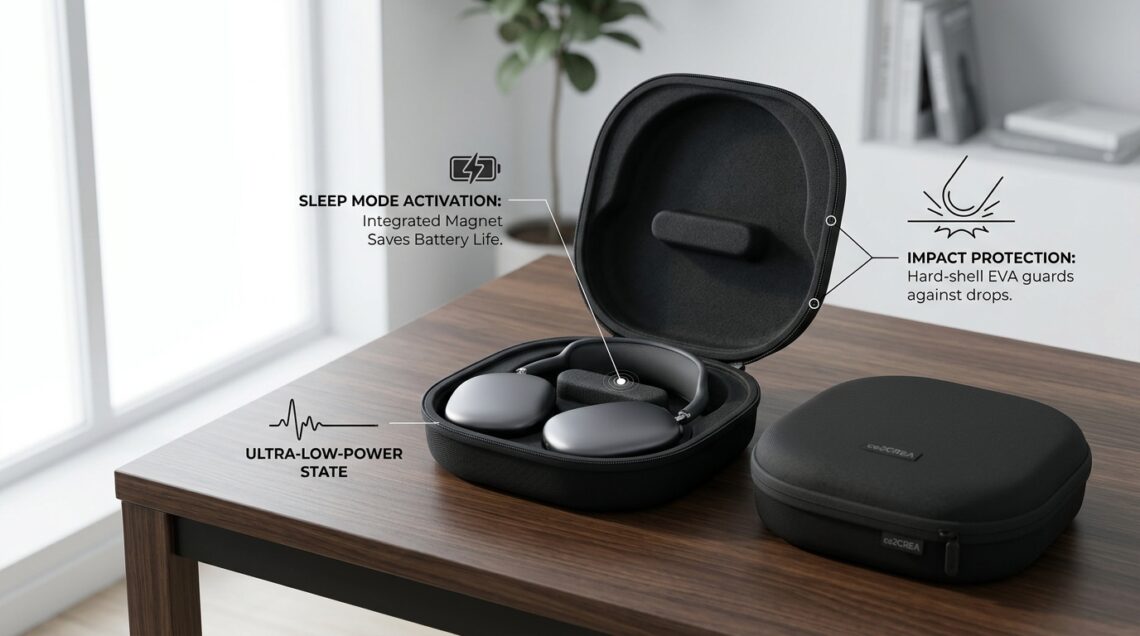
Unlike the soft, minimalist cover that ships with AirPods Max, a hard-shell case is built around a rigid outer structure—often an EVA (ethylene-vinyl acetate) material—designed to resist crushing forces. This matters for anyone who tosses headphones into a backpack alongside laptops, water bottles, or other dense items. A rigid shell is meant to absorb impact rather than transfer it directly to the ear cups or headband.
Sleep Mode Compatibility
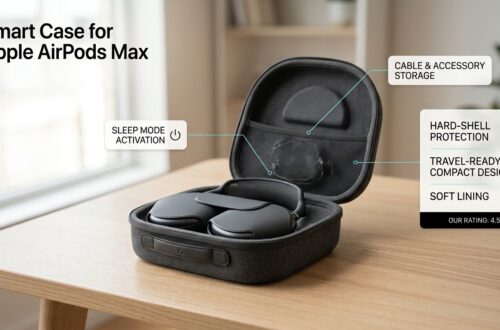
One of the more notable aspects of this particular case design is its attempt to preserve the “sleep mode” functionality that Apple built into the AirPods Max’s Smart Case. Normally, placing the headphones into Apple’s case triggers an ultra-low-power state, helping conserve battery when the headphones aren’t in use. A case that supports this feature is designed with a cutout or compatible interior structure that allows the Smart Case (or an equivalent mechanism) to still engage properly, rather than forcing the headphones into a standard “off” or standby state that drains battery faster.
Interior Lining and Cushioning
Hard cases in this category typically include a soft interior lining—often a felt-like or microfiber material—to prevent scratching against the headphones’ aluminum ear cups and mesh canopy. Molded interior compartments are common as well, holding the headphones snugly in place so they don’t shift around during transport.
Additional Storage Compartments
Many hard cases of this type include a small mesh or elastic pocket for accessories such as a Lightning-to-USB-C cable, a USB-C to 3.5mm adapter, or a cleaning cloth. This turns the case into more of a self-contained travel kit rather than just headphone storage.
Carrying Options
Cases in this category often come with a detachable strap, wrist loop, or carabiner clip, giving users flexibility in how they transport the case—whether that’s clipped to a bag, carried by hand, or tucked fully inside a larger backpack compartment.
Exterior Finish
A black, matte or textured exterior finish is common in this product category, chosen partly for its resistance to visible scuffing and partly because it pairs neutrally with most bag and travel aesthetics.
How It Can Be Used
A hard case like this tends to fit naturally into a few different routines:
Daily commuting. For people who wear AirPods Max on a train, bus, or during a walk to work, having a dedicated case means the headphones can be safely stowed the moment they’re not in use, rather than left loose in a bag where they might get bent or scratched.
Travel and flights. Airports and overhead bins are rough environments for delicate electronics. A rigid case offers a layer of protection against the shuffling and stacking that luggage typically endures, and the accessory pocket can double as a place to store an eye mask, earplugs, or spare charging cable.
Desk or home storage. Even for people who mostly use their headphones at home, a hard case provides a designated spot to keep them protected from dust, spills, or accidental drops off a desk or nightstand.
Gym bags and active use. For those who take their headphones to a gym or shared workspace, a hard case adds a buffer against the kind of jostling that happens when a bag is tossed onto a bench or locker shelf.
Who It May Be Suitable For
This type of case tends to appeal to a few overlapping groups:
- Frequent travelers who want extra assurance that their headphones will survive being packed alongside other gear.
- Commuters who put their AirPods Max through daily wear and want a simple habit of “off head, into case.”
- Owners who skipped AppleCare+ and are looking for a low-cost way to add a physical protection layer, since replacing damaged ear cushions or a bent headband can be costly.
- People who value organization, since the added accessory pocket keeps cables and adapters from getting lost in the bottom of a bag.
- New AirPods Max 2 owners who want protection from day one, before any scuffs or dents have a chance to occur.
That said, not everyone needs this level of protection. Someone who primarily uses their headphones at a single desk and rarely transports them may find a hard case to be more storage than necessary.
Important Things to Consider
Before adding a case like this to a cart, a few practical points are worth thinking through:
Fit and compatibility. Because AirPods Max and AirPods Max 2 have slightly different dimensions or button placements depending on the generation, it’s worth double-checking that a given case is listed as compatible with the specific model owned.
Sleep mode function isn’t guaranteed to work identically to Apple’s case. While many aftermarket cases are designed to accommodate the Smart Case or a similar sleep-triggering mechanism, results can vary based on how precisely the case is molded. It’s reasonable to manage expectations here rather than assume identical performance to Apple’s own case.
Added bulk. A hard-shell case is, by design, less compact than Apple’s original slim cover. For anyone with limited bag space, this trade-off between protection and portability is worth weighing.
Zipper and hinge durability. As with any hard case, the zipper or clasp mechanism is often the first point of wear. It’s worth considering how a case is constructed at these stress points, since that’s typically where failure happens over time.
Material off-gassing smell. Some hard EVA cases have a mild odor when first unboxed, which usually fades after airing out. This isn’t unique to this brand or product category, but it’s a common enough occurrence that it’s worth mentioning.
Comparing General Case Categories
It can help to think about headphone protection in three broad categories, rather than comparing specific brands:
Soft covers (like Apple’s included Smart Case). These are lightweight and slim, prioritizing portability and preserving features like sleep mode by design, but they offer minimal impact protection. They’re best suited to careful handling and low-risk environments.
Hard-shell cases. These prioritize physical protection against drops, crushing, and scratches, often at the cost of some bulk and slimness. They’re a middle ground for people who want durability without an overly rigid or heavy travel case.
Rugged/travel-grade cases. These are built for extreme conditions—think airline cargo holds or outdoor work environments—and often include waterproofing or shock-absorbing foam. They tend to be bulkier and are typically overkill for everyday commuting but valuable for people who travel constantly or work in physically demanding settings.
A hard case with sleep mode support, like the one discussed here, generally sits in that middle category: more protective than a soft cover, more portable than a rugged travel case.
Frequently Asked Questions
Does this case work with both AirPods Max and AirPods Max 2? Cases marketed for both generations are typically designed with dimensions that accommodate minor differences between the models, but it’s always worth verifying compatibility details on the product listing before purchasing.
Will using a hard case affect Bluetooth connectivity while stored? Generally, no—headphones are meant to be powered down or in sleep mode while cased, so connectivity isn’t a relevant concern during storage.
Can the case be used with the headphones’ ear cushions attached? Most hard cases in this category are molded to accommodate the ear cushions in place, so there’s typically no need to remove them before storage.
Is the accessory pocket large enough for a charging cable and adapter? Many cases include a mesh pocket sized for small items like cables, adapters, or cleaning cloths, though very bulky accessories may not fit comfortably.
Does the case come with a strap included? This varies by seller and specific product bundle, so it’s worth checking the listing for details on what’s included.
Conclusion
For AirPods Max and AirPods Max 2 owners who move around with their headphones—whether commuting, traveling, or just navigating daily life—a hard-shell case offers a practical way to add protection without dramatically increasing bulk. While no case can promise handling functions identical to Apple’s original Smart Case, most are designed with sleep mode compatibility and interior cushioning in mind, aiming to strike a balance between protection and everyday convenience.
As with any accessory purchase, it’s worth reading through current product details, compatibility notes, and material specifications before deciding if it fits your particular needs.
You can check more details on Amazon here.